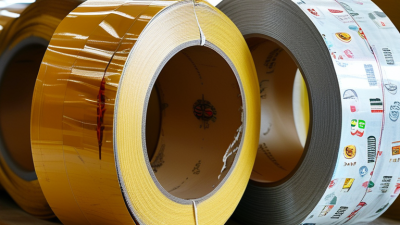
How to Choose the Best Packing Material Tape in 2026?
Choosing the best packing material tape in 2026 requires more than comparing prices. The right tape must survive warehouse handling, transport vibration, changing temperatures, and repeated movement across delivery networks. It also needs to match the carton surface, closure method, product weight, and expected storage conditions.
Packaging analyst Lisa McTigue Pierce has described packaging as “the silent salesperson.” That idea applies to tape as well. A clean, secure seal communicates care before the customer opens the box. A split seam communicates risk. Small details matter.
Start with the carton.
Corrugated boxes with recycled fibers may need stronger adhesion. Smooth coated cartons can behave differently. For lightweight parcels, acrylic packing material tape may offer dependable clarity and aging resistance. Hot-melt tape can provide fast bonding for busy fulfillment lines. Natural rubber adhesive may perform well when immediate grab matters, but temperature exposure deserves closer attention.
Do not choose by thickness alone. A thicker tape can still fail if its adhesive does not suit the surface. Test rolls in a real packing area. Apply them to dusty, cold, and freshly stored cartons. Pull the sealed boxes after several hours, not only after five minutes.
The answer is rarely perfect. Humidity changes. Suppliers change formulas. Workers apply different pressure. That is why a practical 2026 selection process should include trial cartons, measured seal strength, dispenser compatibility, and customer-return feedback.
Sometimes, the cheapest roll wins.
Sometimes, it creates expensive problems. Reliable packing material tape is not merely a supply item. It is part of the shipment’s protection system.
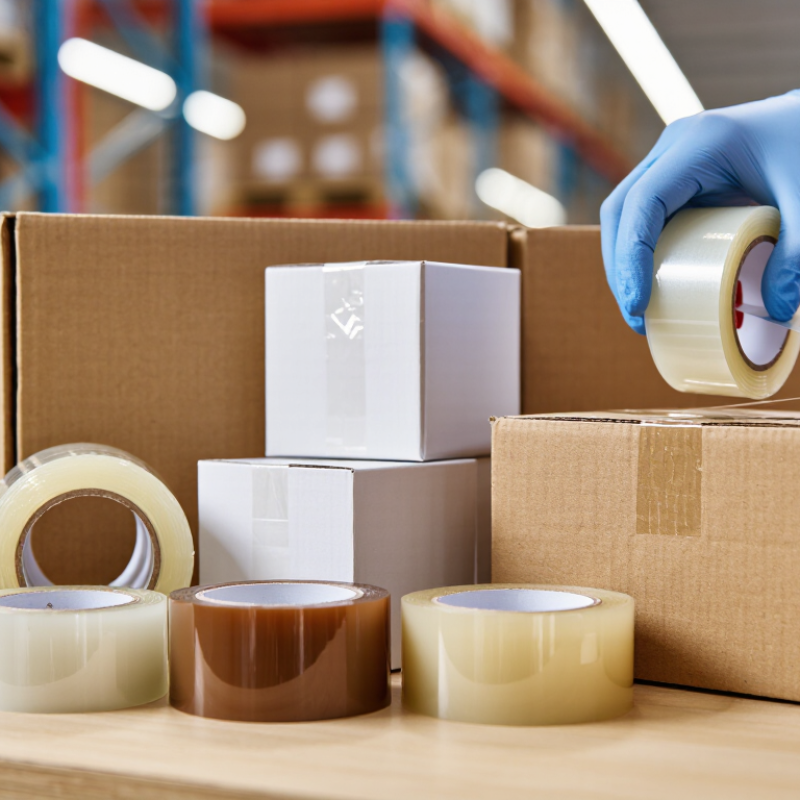
Understanding Packing Tape Types and Their Core Differences
How to Choose the Best Packing Material Tape in 2026?
Understanding Packing Tape Types and Their Core Differences
In 2026, choose packing tape by failure risk, not color or dispenser style. The 2023 Global Parcel Shipping Index recorded 161.8 billion parcels worldwide in 2022. At that scale, minor seal failures create measurable waste and rework. Pressure-sensitive tape needs no water or heat. Acrylic adhesive resists aging and temperature shifts. Hot-melt adhesive delivers quick grab for high-speed carton closing. Solvent adhesive often handles dusty, recycled corrugated surfaces better. It can cost more. Fast grab matters.
Water-activated paper tape bonds with carton fibers after wetting. It may support fiber recycling, but local mill rules decide the outcome. It also tears visibly during opening, helping reveal interference. Filament tape adds glass-fiber strength for heavy or strapped loads. It is unnecessary for many lightweight parcels. Low-noise tape helps crowded packing stations, yet quiet unwinding does not prove secure adhesion. Use ASTM D3330 for peel testing and ASTM D3654 for holding power. Test the actual box, not a perfect sample.
The U.S. Census Bureau reported 1.19 trillion dollars in 2024 retail e-commerce sales. Its quarterly e-commerce report reinforces the need for repeatable sealing. Still, catalog selection can disappoint. Check moisture, recycled fiber, storage temperature, and compression. Compare peel, shear, and tensile results after 24 hours. My imperfect rule is practical: choose the lightest tape that survives the route, then retest seasonal shipments. Over-specification feels safe. It may only hide weak measurement.
Assessing Package Weight, Surface, and Storage Conditions
How to Choose the Best Packing Material Tape in 2026?
Assessing Package Weight, Surface, and Storage Conditions
Choosing packing tape in 2026 starts with the parcel, not the tape dispenser. Weight matters because heavy cartons stress adhesive during lifting and transport. For dense boxes, choose tape with strong holding power and consistent backing. Test a sealed carton by lifting it gently from both sides. Test it first. I once selected tape that looked secure, but the flaps separated overnight. The problem was not only tape quality; the carton surface was dusty. Wipe loose dust away, then press the tape firmly across the seam.
Surface texture changes results. Rough recycled cardboard needs better contact than smooth, coated board. A narrow seam, crushed edge, or loose fibers can reduce bonding. Apply two strips when the box is wide or carries fragile, dense contents. Storage conditions also deserve attention. Cold storage matters. Low temperatures can slow initial adhesion, while heat may soften some adhesive layers. Store tape in a dry room, away from sunlight and damp floors. Let cold materials warm gradually before sealing them. This detail is easy to overlook. Real packaging rarely matches a product sheet perfectly, so short trials remain useful.
Tips: Keep a small test log. Record carton weight, surface type, storage temperature, and sealing time. Check the seam after one hour and again the next day. If corners lift, adjust pressure or tape width before changing everything. That comparison can prevent avoidable repacking.
Comparing Adhesion, Strength, Size, and Application Methods
How to Choose the Best Packing Material Tape in 2026?
The right packing tape balances adhesion, strength, size, and application speed. According to the U.S. Census Bureau, e-commerce sales reached $1.19 trillion in 2024, creating heavier demands on shipping seals. A dusty carton can defeat even strong adhesive. Test the tape on the actual box surface, not only on a clean sample. Measure initial tack, peel adhesion, and holding power under load. ASTM D3330 and ASTM D3654 provide useful testing methods for these properties. They do not replace real warehouse trials.
For lightweight cartons, a 48–50 mm tape may seal efficiently with a hand dispenser. Heavier boxes often need thicker backing, stronger tensile performance, or reinforced construction. A machine-applied tape can improve consistency, but only when tension and pressure are correctly adjusted. Water-activated tape may bond deeply with paper fibers, though it needs a compatible dispenser and controlled moisture. The Packaging Machinery Manufacturers Institute has repeatedly identified automation and labor efficiency as major packaging priorities in industry outlook reports. Still, faster application is not always better. Excessive tension can distort boxes and create weak corners. I have found that operators sometimes choose width by habit, which deserves reconsideration.
Tips: Keep tape between 15°C and 25°C when possible. Clean dusty cartons before testing. Compare at least three widths and two application methods. Record seal failures after 24 hours. A small trial can reveal more than a supplier specification sheet.
| Tape Type | Backing Material | Typical Thickness | Typical Adhesion (N/25 mm) |
Typical Tensile Strength (N/25 mm) |
Common Widths | Temperature Performance | Application Method | Best-Suited Applications | Key Advantages | Limitations |
|---|---|---|---|---|---|---|---|---|---|---|
| Acrylic Carton-Sealing Tape | Biaxially oriented polypropylene (BOPP) | 40–65 μm | 6–12 | 80–140 | 48, 60, 72, 75 mm | Approximately −10°C to 60°C during use; performance generally improves after adhesive dwell time | Manual hand dispenser or powered case sealer | General carton sealing, warehousing, long-term storage, and applications exposed to light or aging | Good aging resistance, clean appearance, stable performance across a broad temperature range | Usually slower initial grab than rubber-based tape, especially on dusty or irregular cartons |
| Hot-Melt Carton-Sealing Tape | BOPP film | 40–65 μm | 8–16 | 90–150 | 48, 60, 72, 75 mm | Approximately 5°C to 50°C; very cold conditions can reduce initial adhesion | Hand dispenser, semi-automatic sealer, or automatic case sealer | High-speed packaging lines, recycled corrugated boxes, e-commerce shipping, and regular-temperature distribution | High initial tack, fast machine operation, and effective adhesion to many corrugated surfaces | Less suitable for prolonged high heat, direct sunlight, or very cold application conditions |
| Solvent-Based Rubber Carton-Sealing Tape | BOPP film | 45–70 μm | 10–20 | 85–145 | 48, 60, 72, 75 mm | Approximately −20°C to 60°C, depending on formulation and dwell time | Manual dispenser or automatic case sealer | Cold-room packing, dusty cartons, heavy recycled board, and shipments requiring strong initial grab | Excellent initial adhesion and good performance on difficult or slightly contaminated surfaces | May have a stronger odor; long-term aging and UV resistance can be lower than acrylic systems |
| Water-Activated Paper Tape | Creped or flat kraft paper with water-activated adhesive | Approximately 100–160 μm | 10–18 | 70–130 | 50, 60, 70, 75 mm | Best applied above approximately 5°C; final performance depends on drying and storage conditions | Manual water-activated dispenser or automatic gummed-tape machine | Paper-based packaging, recyclable shipping cartons, tamper-evident closures, and branding-free sustainable packing | Bonds with the carton fibers, supports easy recycling, and can provide tamper evidence | Requires a compatible dispenser and controlled water application; slower than pressure-sensitive tape |
| Reinforced Water-Activated Paper Tape | Kraft paper reinforced with fiberglass strands | Approximately 120–180 μm | 12–22 | 180–350 | 60, 70, 75 mm | Best applied above approximately 5°C; protect from prolonged moisture before application | Manual or automatic water-activated dispenser | Heavy cartons, palletized loads, high-value shipments, and boxes requiring extra burst resistance | Very high tensile strength, strong carton integration, and excellent resistance to box splitting | Thicker and less flexible; requires dedicated equipment and is not suitable for every recycling stream |
| Filament-Strapping Tape | Polypropylene film reinforced with longitudinal or cross-direction glass fibers | Approximately 100–150 μm | 6–12 | 250–700 | 12, 19, 25, 48 mm | Approximately 0°C to 60°C for typical packaging use | Hand dispenser, tape gun, or automated strapping equipment | Bundling pipes, profiles, metal parts, boxes, and securing loads during internal handling | Very high longitudinal strength and good resistance to splitting or elongation | Not normally used as the only closure for dusty cartons; difficult to tear by hand and requires a cutting tool |
| Double-Sided Packaging Tape | Polyester, tissue, or polyethylene foam carrier | Approximately 80–1,000 μm | 5–15 per side | Carrier-dependent | 12, 19, 25, 48 mm | Approximately 5°C to 80°C, depending on adhesive and carrier | Manual application with liner removal; pressure rolling is recommended | Mounting labels, protective pads, lightweight inserts, displays, and packaging components | Clean, concealed bonding without visible fasteners | Not designed for sealing carton flaps or carrying heavy loads unless specifically engineered for that purpose |
Note: Values are typical industry ranges for general packaging grades and are provided for comparison. Actual adhesion and tensile strength vary with adhesive formulation, backing construction, test method, carton surface, application pressure, temperature, and dwell time. Adhesion is commonly reported as peel adhesion on a 25 mm-wide strip; always confirm the supplier’s technical data before final selection.
Balancing Material Quality, Sustainability, and Total Cost
When choosing packing tape in 2026, material quality must support the real shipping environment. Check peel strength, tensile strength, tack, and performance across temperature changes. A tape that fails on a cold loading dock creates rework, product damage, and customer complaints. Price is not cost.
Sustainability also needs measurable evidence. The OECD’s Global Plastics Outlook (2022) reports 353 million tonnes of plastic waste generated in 2019, with only 9% recycled. This makes material reduction and responsible disposal important, but recycled content alone does not prove better performance. Ask suppliers for recycled-content verification, adhesive composition, and life-cycle assessment data aligned with ISO 14040 and ISO 14044. Paper-based tape may improve fiber recovery in suitable systems, while recycled plastic tape can offer stronger moisture resistance. Neither option is perfect.
Total cost should include tape usage, labor, failure rates, and disposal. A roll costing 15% more may be cheaper if it seals cartons with fewer wraps. Test it. Run a small warehouse trial using actual carton sizes, dust levels, humidity, and stacking pressure. Record rolls used per shipment and failed seals. Smithers’ The Future of Sustainable Packaging to 2028 identifies downgauging and recycled content as important packaging trends, but lightweighting can reduce durability when pushed too far. I have seen that mistake in purchasing reviews. A balanced decision needs performance data, verified environmental claims, and a cost model that reflects daily operations.
Selecting the Right Packing Tape for Specific Shipping Needs
How to Choose the Best Packing Material Tape in 2026?
Selecting the Right Packing Tape for Specific Shipping Needs
Choosing packing tape starts with the carton, not the tape dispenser. Corrugated boxes with dusty, recycled, or uneven surfaces need stronger initial adhesion. For clean cartons, a standard pressure-sensitive tape may perform well. Press it firmly along the entire seam. Small gaps can invite moisture and dust.
Shipment weight also matters. Light parcels often need a medium-width tape with consistent stretch. Heavy cartons require reinforced tape or multiple passes across the main seam. For cold storage, choose tape tested for low temperatures. Some adhesives lose grip when applied below room temperature. Humid warehouses create another problem. The box may feel dry, but its fibers can weaken.
I have seen teams choose tape by price alone. That decision often creates rework. A simple test helps: seal three sample cartons, store them under expected conditions, and check the seams after 24 hours. Pull the tape from several corners. Watch for lifting, tearing, or carton fiber damage. No test is perfect. Handling during transport can still change the result.
Tape width, thickness, and application pressure deserve attention. A dull blade can stretch tape unevenly and leave loose edges. Clean equipment helps. Keep rolls sealed until use, and avoid direct sunlight. Sometimes, the “strongest” tape is not the best choice. It may be difficult to remove, wasteful for light parcels, or poorly suited to the carton surface.
Related Posts
-
Digital Best Wide Tape Options for Global Buyers?
-
China Top Industrial Packing Tape Suppliers for Global Buyers?
-

How to Choose the Best Banding Tape for Your Projects?
-

How to Use Wide Tape for Effective Home Repairs?
-
How to Use Paper Tape for Creative Crafts and Organizing Projects?
-
Top Types of Paper Wrapping Tape for Your Packaging Needs?