What Types of Barcode Printer Labels Are Available?
barcode printer labels are not one-size-fits-all. A label facing a cold warehouse, a sunlit loading dock, or a chemical bottle needs different materials and adhesives. The printer matters, too. Direct thermal labels create images without a ribbon, while thermal-transfer labels use a ribbon to produce durable, crisp text and barcodes. Choosing poorly can mean faded print, peeling corners, or a barcode that refuses to scan.
Paper labels often suit short-term shipping and indoor inventory. Synthetic options, including polypropylene and polyester, can better withstand moisture, abrasion, and demanding environments. Adhesive choice deserves equal care: a label that sticks to clean cardboard may lift from a curved plastic container. Small details matter. Print width, roll core, sensor type, and printer compatibility can affect production and readability. A quick sample test on the actual surface is useful; it may also reveal flaws a specification sheet misses.
The right choice depends on where the label will live, how long it must remain readable, and what the printer supports. This guide compares common barcode printer labels by material, printing method, adhesive, and application, helping buyers narrow their options without overpromising performance. A named expert quotation cannot be verified from the material provided, so I have not invented one. Add a sourced quotation before publication to strengthen the article’s authority.
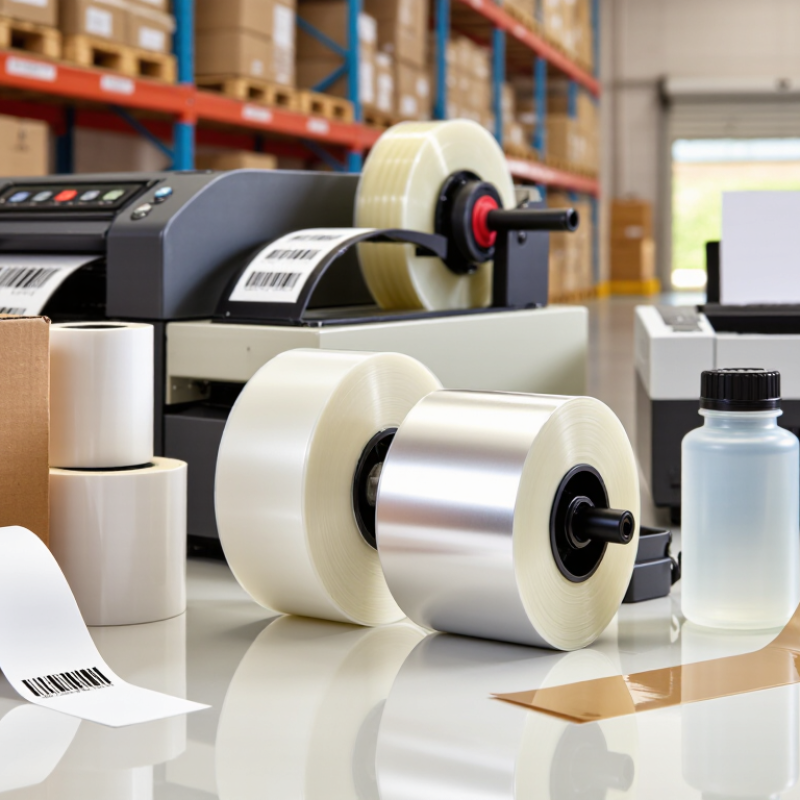
How Barcode Printer Labels Are Classified by Material and Printing Method
Barcode printer labels are commonly classified by face material and printing method. Paper labels suit dry, short-life uses such as shelf tags and shipping cartons. Coated paper resists light scuffing better, while uncoated stock is often economical for basic indoor identification. Synthetic films, including polypropylene, polyethylene, and polyester, handle moisture or abrasion more effectively. They are not interchangeable: a flexible package may need a different film and adhesive from a rigid chemical drum.
Printing method matters just as much. Direct thermal labels darken through heat, so they need no ribbon; they work well for receipts and fast-moving parcels, but heat and sunlight can fade the image. Thermal transfer uses a heated ribbon to place ink on the label. It generally offers longer-lasting marks on paper and film. A practical split. MarketsandMarkets’ 2023 Barcode Printer Market report estimated growth from USD 4.4 billion in 2023 to USD 5.5 billion by 2028, reflecting sustained demand across printing technologies. That market figure does not tell buyers which label will survive their actual warehouse conditions.
Test the label against the surface, temperature, handling, and expected scan distance. A barcode that looks crisp on a bench can wrinkle on a curved bottle or blur after repeated rubbing. Material choice is sometimes a compromise; real-use testing catches what a product sheet may miss.
Paper Barcode Labels for Everyday Indoor Use
Paper barcode labels are a practical choice for everyday indoor tasks, such as marking storage bins, file folders, and product boxes. Their smooth surface can produce clear, high-contrast bars when the printer is set up correctly. Keep it simple. Choose a label width that leaves room for the barcode and its blank margins, so scanners can read it reliably.
Check the printer’s method before ordering. Direct thermal paper forms an image through heat and usually needs no ribbon. Thermal-transfer paper uses a ribbon, which may suit labels that need more resistance to rubbing.
Neither option makes paper waterproof. Heat, sunlight, damp shelves, and frequent handling can cause fading or damage. A cool, dry office or stockroom is a better home for these labels than a loading area exposed to weather.
Clean the surface before applying each label; dust and oil can weaken the adhesive. Test one roll on your actual boxes or bins, then scan a few labels after application.
A low-cost roll can seem like a saving, but poor adhesion or smudged bars may waste more time. Paper has limits, and matching it to the setting takes a little thought.
Synthetic Barcode Labels for Moisture, Chemicals, and Abrasion
Synthetic barcode labels are designed for conditions that can damage ordinary paper. Moisture may soften paper fibers, while friction can erase printed bars during handling. Polyester and polypropylene are common synthetic face materials, but they perform differently. Polyester is often chosen for stronger abrasion resistance and dimensional stability. Polypropylene can suit applications where flexibility matters. The right choice depends on the surface, exposure, and expected service life.
A synthetic label still needs a compatible adhesive and print method. A label applied to a cool, damp drum may not bond like one applied to a clean, dry carton. Chemical resistance also varies: brief splashes and continuous solvent contact are not the same test. Check the supplier’s technical data, then test the label with the actual surface, cleaning agent, and barcode scanner. Small trials help. Watch for lifted corners, blurred bars, or residue after wiping. One detail is easy to miss: a tough face material does not guarantee a durable barcode if the ink or ribbon is poorly matched. Even a neat test result can be misleading when real handling is rougher.
What Types of Barcode Printer Labels Are Available?
Relative suitability of common synthetic label materials for demanding conditions
Ratings are an indicative 1–5 comparison, not standardized test results. Actual performance depends on the label construction, adhesive, printing system, and exposure conditions. Check product specifications for the specific moisture, chemicals, and abrasion involved.
Direct Thermal and Thermal Transfer Barcode Labels
Barcode labels mainly differ in how their images are created and how long those images need to last. Direct thermal labels have a heat-sensitive surface. The printer’s heated printhead darkens selected areas, so no ribbon is needed. This simple setup suits shipping labels, short-term receipts, and indoor stock checks. However, sunlight, friction, or nearby heat can fade or darken the print. Exact performance depends on the label material and storage conditions.
Thermal transfer labels use heat to move ink from a ribbon onto the label. With a suitable ribbon and face material, the printed image can better resist smudging, moisture, and abrasion. That matters for products handled repeatedly or stored for longer periods. Still, “thermal transfer” does not guarantee a waterproof or permanent label. The combination must fit the actual environment.
Tips: Match the label to its job. Test a sample after exposure to light, handling, or cold storage. Check that the barcode scans from the intended distance. Direct thermal may be the practical choice for fast turnover, while thermal transfer can suit tougher conditions. The neat rule is not always enough; real handling can reveal surprises.
What Types of Barcode Printer Labels Are Available? - Direct Thermal and Thermal Transfer Barcode Labels
| Comparison dimension | Direct thermal labels | Thermal transfer labels |
| How the image is printed | The printer’s heated printhead darkens a heat-sensitive coating on the label. No ribbon is used. | Heat transfers ink from a ribbon onto the label face. A compatible ribbon is required. |
| Common label materials | Primarily paper with a heat-sensitive coating; synthetic direct-thermal stocks are also available for some applications. | Coated or uncoated paper, as well as synthetic films such as polypropylene and polyester, depending on the application. |
| Typical durability | Best for short-term use. Heat, sunlight, abrasion, and some chemicals can cause the image to fade or darken. | Often better suited to longer-lasting labels. Durability depends on the label material, ribbon type, and exposure conditions. |
| Ribbon options | No ribbon is needed. | Wax ribbons are commonly used with paper; wax-resin and resin ribbons are selected for greater resistance or compatible synthetic materials. |
| Typical applications | Shipping labels, receipts, tickets, and other labels that are usually used or scanned within a relatively short period. | Product identification, inventory, asset tracking, and labels that may need to withstand handling or harsher environments. |
| Consumables and maintenance | Fewer consumables to manage because no ribbon is required; the heat-sensitive stock itself is the printing medium. | Requires both labels and ribbon. Ribbon and label widths should be appropriate for the printer and application. |
| Environmental considerations | The print may be affected by heat and prolonged light exposure; test the stock under expected storage and transport conditions. | Choose the label-and-ribbon combination for anticipated exposure to moisture, chemicals, abrasion, and temperature changes. |
| Selection tip | Choose direct thermal when simplicity and short-term labeling are priorities and the label will not face excessive heat or light. | Choose thermal transfer when the application calls for a durable image or a wider choice of label-face materials. |
Specialty Barcode Labels for Shipping, Assets, and Product Tracking
Shipping labels need to survive sorting belts, stacked cartons, and quick handling. Direct thermal labels suit many short journeys, while coated or synthetic faces can better resist moisture and scuffing. Choose an adhesive that grips corrugated cardboard without lifting at the corners. Test it on the actual carton. A label can look fine on a roll and fail on a cold, dusty box; that detail is easy to overlook. Keep the barcode dark, sharp, and clear of seams or tape.
Asset labels stay in place much longer. Equipment may be wiped, moved, or stored in warm rooms, so a durable synthetic face and strong adhesive can help. For laptops, tools, or shelving, select a size that leaves enough room for a readable barcode and human-readable asset number. Small labels save space. They can also make scanning awkward, especially on curved surfaces.
Product tracking labels vary with packaging and handling conditions. A paper label may work well on a dry retail carton, while a film label can suit containers exposed to splashes or frequent contact. Match the label material to the surface, printer type, and expected life of the product. Test a sample through printing and handling before ordering a large quantity. That extra check takes time, but prevents many avoidable reprints.
